
Everything You Need To Know About The Sacred Valley Altitude
Is The Sacred Valley Altitude High?
First of all, it’s important to know that the Sacred Valley is a large region – and given the nature and structure of the Andes, elevations are always climbing or falling in different areas. However as a general rule of thumb, average altitudes hover around 2600-2800m – which is less than Cusco’s 3399m – and can be considered a medium altitude destination which requires a little bit of preparation but not lots like other higher destinations.
It’s also worth exploring the highest highs and lowest lows of the Sacred Valley altitudes so you know what to expect in different areas. The highest touristic destination in the Sacred Valley is Chinchero, which is famous for its indigenous communities, woven textiles and Inca ruins – located up at 3762m. The lowest point is Aguas Calientes, which is known for its hot springs and close proximity to Machu Picchu – located at an altitude of 2040m.
Prevalence Of Altitude Sickness In The Sacred Valley Region
As we’ve seen in the last section, altitude sickness isn’t as much of an issue here in the Sacred Valley compared with the altitude in Cusco or other high elevated destinations (such as Lake Titicaca or Huaraz). However given its average altitude of 2600-2800m, it can be possible to get some mild altitude sickness symptoms.
Usually altitude sickness affects people anywhere from 2500m upwards, given the air becomes slightly thinner than at places with lower altitudes. This puts the Sacred Valley as a possible risk area, although most tourists have zero issues here when taking it slower their first couple of days. When some do have a symptom or two, they are mostly mild symptoms such as headaches or very slight nausea which are easily treatable.
How To Avoid Getting Altitude-Related Issues During Your Visit
Getting to the Sacred Valley requires that you must first reach Cusco (because of the remote geography), which is higher up at 3399m. Travellers that complain of altitude sickness symptoms in the Sacred Valley most likely first get affected in Cusco before coming – so it’s ideal to move straight to the Sacred Valley upon arriving to lower your chances. This will then allow you to acclimate more gently, before heading to Cusco and other higher altitude treks and trips.
Medication is the strongest way of preventing and relieving altitude sickness symptoms, which you can start before you even arrive into the Cusco region. Diamox tablets can be taken once you are cleared by your doctor, and within Cusco or the Sacred Valley you can also take Soroche Pills or Coca Leaf Tea which contain natural ingredients that prevent altitude sickness symptoms.
On the flip side of the coin, it’s also important to look at what you shouldn’t do when arriving. For the first two days while your body is naturally acclimating (regardless if in the Sacred Valley or Cusco), you’ll want to avoid drinking alcohol since it worsens symptoms – and also to drink water frequently. Also stick to gentle city or town exploration only, and don’t head on demanding hikes just yet (this includes the Ausangate Trek, Salkantay Trek, Rainbow Mountain or Lake Humantay). Machu Picchu however is fine to visit on your first day given its low altitude of 2430m.
A Full Breakdown Of Every Sacred Valley Destination And Their Altitudes
Now we’ll explore all of the major destinations that you can visit in the Sacred Valley, their varying altitudes and how to plan your trips accordingly.
Aguas Calientes / Machu Picchu Altitude (2040-2430m / 6692-7972ft)
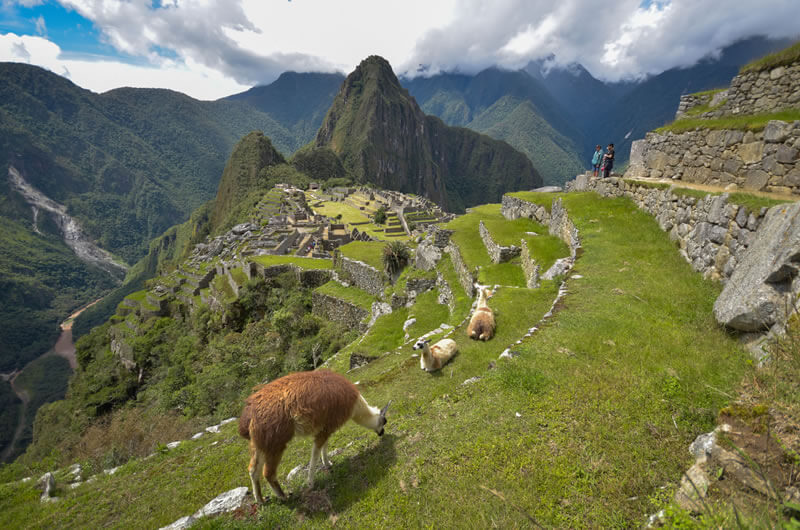
The lowest altitude destination in the Sacred Valley, Aguas Calientes sits at a very pleasant 2040m. The gateway town to Machu Picchu, this is the perfect first place to visit as your body acclimates, where even the geography transforms from typical Andean plains to green jungle mountains – where we can visit numerous waterfalls, as well as relax in the natural hot springs in town. There’s no need to plan at all for any of the activities here – and Machu Picchu’s higher altitude of 2430m is still a breeze and can be visited on your first day with no issues.
Ollantaytambo Altitude (2792m / 9160ft)
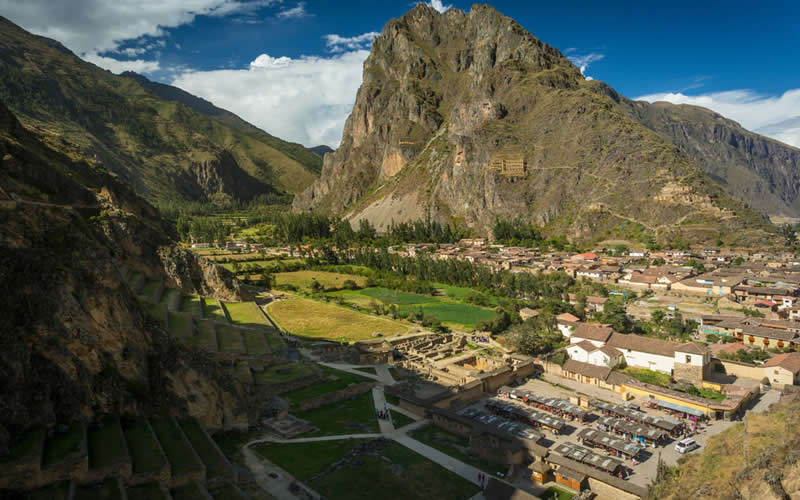
Next we head higher into the Sacred Valley to the Andean mountain town of Ollantaytambo – which is a hotspot for tourism and a perfect place to base yourself when first arriving into the region. From here we can easily visit Ollantaytambo Ruins, the ruins of Moray as well as the Maras Salt Pools. At this altitude of 2792m you might feel a very light symptom or two, however it’s still worth heading here first instead of Cusco for a more gentle acclimatisation. By day 2-3 you should be fine to start heading on easy hikes here.
Urubamba Altitude (2871m / 9419ft)
Climbing ever so slightly in elevation, we now have the more remote town of Urubamba located further north than the other popular towns like Pisac and Ollantaytambo. Known for its beautiful town landmarks, cathedral and nearby viewpoints, Urubamba is also a popular place for tourists to head before or after visiting Machu Picchu. While slightly higher than Ollantaytambo, the same principles apply here – where we suggest taking it easy your first couple of days when arriving before tackling high altitude treks.
Pisac Altitude (2972m / 9751ft)
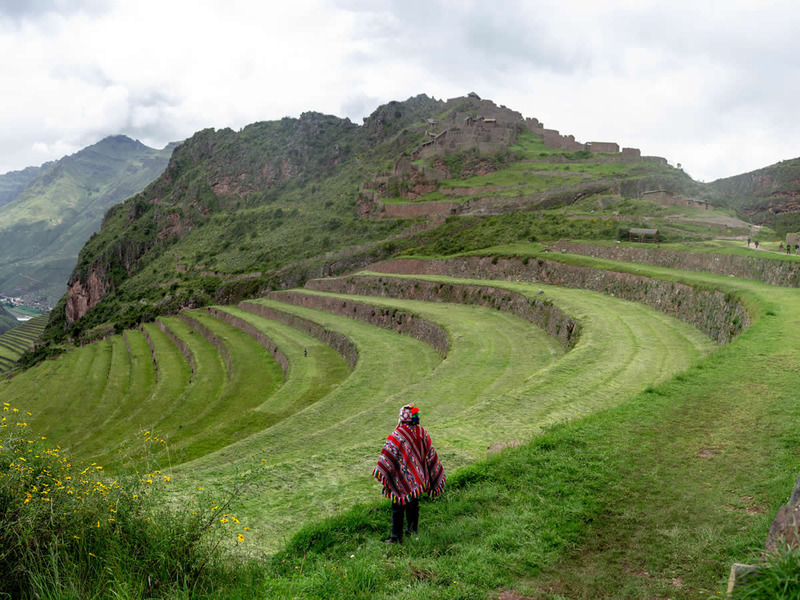
Next up we have the ancient town of Pisac, which is almost touching the 3000m altitude line. Although only 100m higher than Urubamba, effects of the altitude are more noticeable here – and especially when arriving from Lima and coming directly to the town. It’s still better than staying in Cusco given it’s more than 300m lower, and here we can visit Pisac Ruins, local markets and also the cultural gem of the Parque de las Papas. Drinking Coca Leaf Tea for your first couple of days is recommended here to prevent any altitude sickness symptoms from occurring.
Chinchero Altitude (3762m / 12342ft)
The last major tourism destination on our list for the Sacred Valley, Chinchero is a true outlier in terms of its altitude. Located up at a much higher 3762m, here the changes in elevation are much more apparent – and altitude sickness can be a risk for those who haven’t yet acclimated in Cusco. However it’s definitely still worth visiting for its ancient ruins and local markets – and as such you’ll want to spend a few days in Cusco prior to visiting, where heading on gentle hikes, drinking Coca Leaf Tea and optionally taking Soroche Pills will make a visit here trouble-free.
How To Properly Prepare For A Visit To The Sacred Valley Region
Once you’ve decided you want to explore the Sacred Valley region, actually planning your trip here is quite simple.
Head To The Sacred Valley First For Easier Altitude Acclimatisation
Firstly, given the more moderate altitudes here compared with Cusco, for many travellers it makes sense to spend their first few days here for a more gentle acclimatisation. Of course you’ll need to first get to Cusco city – where you can then take a taxi or shuttle into the Sacred Valley. Some of the very best places to start with are either Ollantaytambo or Pisac, both of which are hubs for their particular regions and have lots of great things to do nearby.
Know The Best Ways To Prevent Altitude Sickness
As well as gently increasing your altitude, there are a few other tried-and-tested methods of beating altitude sickness. This includes drinking Coca Leaf Tea as well as taking Soroche Pills, both of which have natural ingredients that help your body acclimate quicker. You’ll also want to drink plenty of water to stay hydrated, and to try to avoid alcohol the first couple of days while your body is working its hardest to adjust.
Prepare For Varied Climates
It’s important to know that temperatures still highly vary throughout the day in the Sacred Valley, where daytimes can be quite hot when skies are clear (especially in the dry winter season). Evenings and early mornings are quite cold, so you’ll want to bring a few thick layers and a coat ready. During the rainy season (from November until April), we’ll also want to bring a poncho or rainproof jacket since showers often arrive randomly out of nowhere – although they’re not usually that long-lasting.
Explore The Sacred Valley With An Expert Cusco Tour Operator
If you’re still unsure of the best order to explore the Sacred Valley or want an expert experience provided for you, then join our Sacred Valley Day Tour From Cusco where we’ll take you to the very best spots – using private transport to make travel times much quicker.

Frequently Asked Questions Regarding The Sacred Valley Altitude
Below we’ll now answer some of the frequent questions we get about the Sacred Valley altitude, as well as anything else important that you need to know.
Is The Sacred Valley Lower Than Cusco?
The overall average elevation of the Sacred Valley ranges from 2600-2800m, which is much lower than Cusco’s average of 3399m. Whilst some exceptions like the town of Chinchero are higher than Cusco, the majority of this region is lower in elevation – which makes it more comfortable for acclimating the first few days, and also for hiking without getting any unwanted symptoms.
Is It Better To Acclimate In Cusco Or Sacred Valley?
The majority of travellers arriving into Cusco usually come directly from Lima, which means you’ll have had no altitude preparation upon arrival. This means that it’s more likely to get altitude sickness – and therefore the Sacred Valley is best as a first stop for acclimating. You can spend 2/3 days here as your body naturally adjusts, where you can enjoy ruins like Ollantaytambo and Machu Picchu which aren’t so physically demanding.
Which Is Higher, Cusco Or Machu Picchu?
Cusco is by far the highest of both destinations, with an altitude of 3399m – while Machu Picchu sits at a more comfortable 2430m. Not only is it much easier to walk around without tiring in these famous Inca ruins, however the environment itself also transforms into a green paradise with jungle and flourishing thick flora growing off the cliffs. This is why it’s worth heading to Machu Picchu early in your trip to avoid altitude sickness issues.
Overview Of The Sacred Valley Altitude
And that’s all for this comprehensive guide to the Sacred Valley altitude, how high it is, as well as how to best prepare for a trip here.
The Sacred Valley region is by far one of Peru’s most incredible wonders, which is easily accessible from Cusco. Between charming mountain towns like Ollantaytambo and Pisac, we can discover ancient Inca ruins, the beautiful Maras Salt Pools, towering glacial lagoons and more. Thankfully the overall altitude of the Sacred Valley is pleasant and much lower than Cusco – making it an ideal first stop for travellers arriving into the region.
Are you looking for the best way to experience the Sacred Valley? Here at AB Expeditions we operate the most comprehensive Sacred Valley Day Tour From Cusco, which is perfect for those who want to see the highlights without wasting time. Not only will you fly around in private transport and can choose your route as you want, you’ll also have an experienced lead guide teach you all that you need to know about this fascinating region.

Peru Travel Expert
- George Alvarez

- George Alvarez
- George Alvarez
- George Alvarez
