
The Problem: A Reality We Cannot Ignore
The Sacred Valley of the Incas, recognized by UNESCO as a World Heritage Site for its outstanding cultural and historical value, is currently facing a growing and deeply concerning environmental challenge: the accumulation of solid waste along its trails, particularly on the route leading to Huchuy Qosqo. What should be a pristine landscape of cultural significance and natural beauty is increasingly affected by plastic wrappers, bottles, and other non-biodegradable materials. In several areas, this waste has transformed parts of the trail into visible evidence of an environmental crisis, negatively impacting both local ecosystems and the overall visitor experience.
Faced with this reality, and guided by our responsibility as operators and members of the local community, we recognized that action was necessary. Rather than ignoring the problem, we made the decision to organize a dedicated cleaning campaign with the goal of helping to protect, restore, and preserve the Huchuy Qosqo route. This initiative represents our commitment to environmental stewardship, sustainable tourism, and respect for the cultural and natural heritage of the Sacred Valley—ensuring that it can be enjoyed responsibly by future generations.
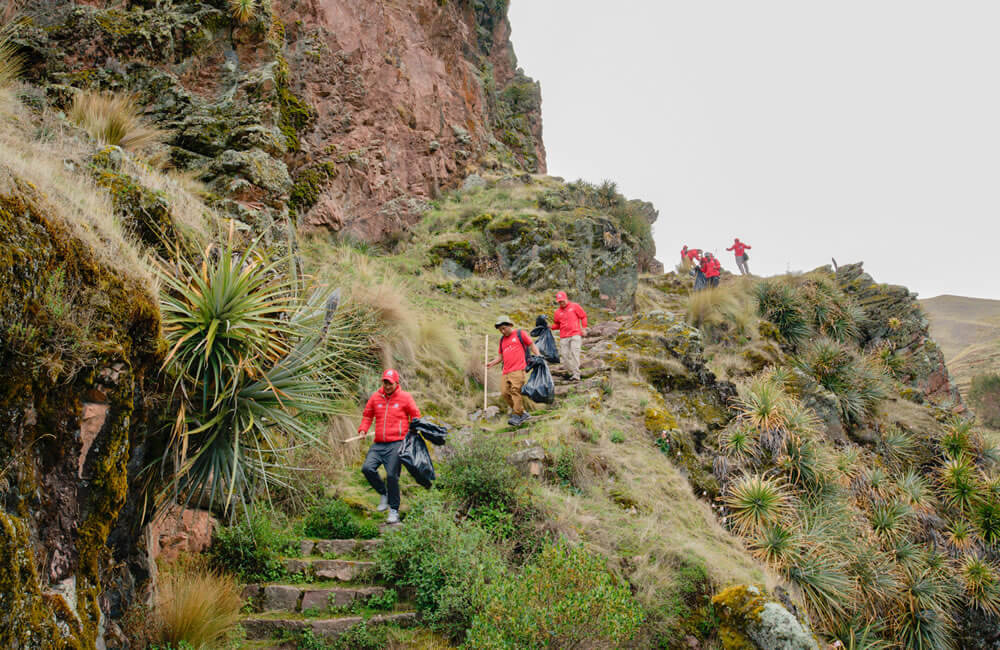
Our Experience Cleaning Huchuy Qosco In Sacred Valley
Starting the Day with a Purpose
We began our walk as the sky turned light blue, moving along a narrow trail winding through hills near Sihua. After a short introduction from our guide about the day’s purpose, each person took a bag and started walking with eyes on the ground. Every plastic wrapper, every discarded container became a small victory—a bottle hidden among rocks, a snack bag in dry grass, a plastic bag caught in low bushes.
Walking in Silence Through the Valley
For about an hour, we climbed steadily. The trail was quiet: all we could hear was the sound of our footsteps on the ground, the soft bells of cows grazing nearby, and the occasional braying of donkeys. The effort was real, but when we reached the first viewpoint, we stopped for another reason. The valley opened before us, and we paused in silence to take it in. We rested there, drinking water and sharing fruit while watching local shepherds guide their animals along the same trail, sharing the space and the moment.
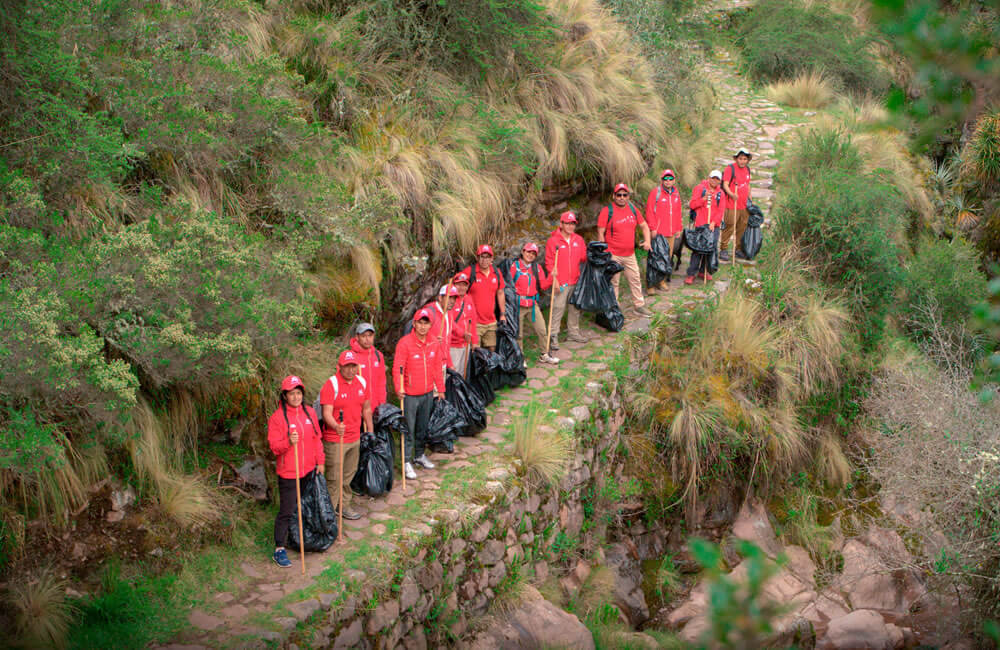
Filling Our Bags Along the Way
With renewed energy, we continued collecting waste along the route. By the time we reached the highest point, our bags were noticeably heavier—clear evidence of what we had removed from the landscape. The descent was easier on the body, and we kept collecting debris scattered along the path.
Arriving at Huchuy Qosqo
By the time we reached Huchuy Qosqo, our bags were almost full. Wilfredo, our archaeologist, asked us to leave them in a safe place so we could explore the site properly. Standing in front of the stone walls, he shared the history of the place. He explained that Huchuy Qosqo, which means “Little Cusco” in Quechua, was built in the 15th century as a resting place for the Inca Wiracocha. He showed us the water channels carved into the rock, ceremonial rooms, and agricultural terraces that still remain remarkably intact.
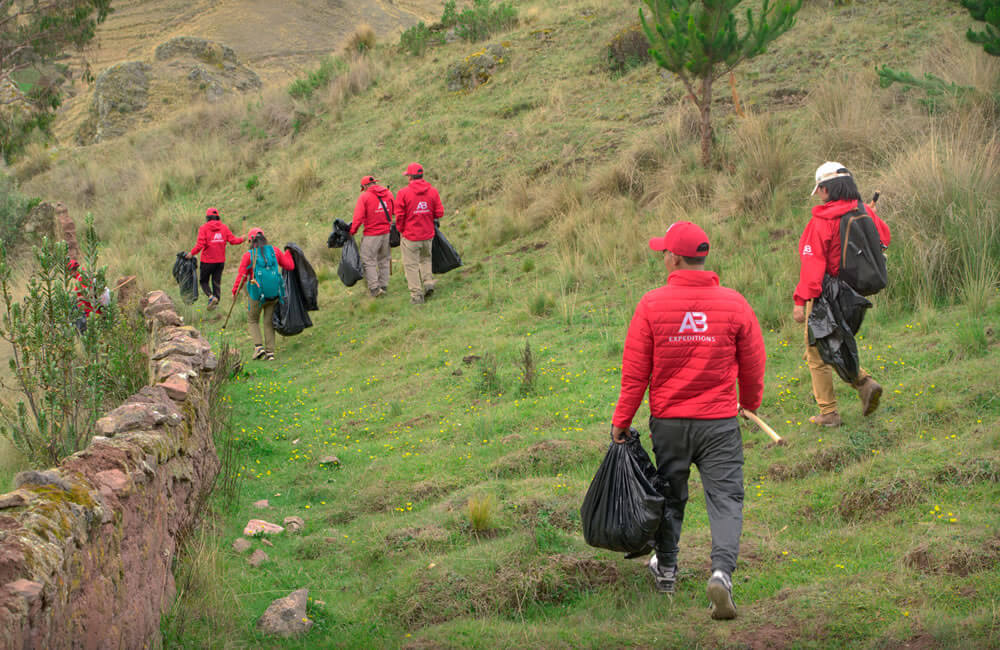
Learning While Protecting
At that moment, we were no longer focused on collecting trash. We became listeners and learners, understanding that protecting a place like this also means knowing its story and respecting what it represents.
Meeting the Local Community
We continued our walk along part of an old Inca trail, crossing small bridges and passing rivers and mountains. At a second viewpoint overlooking the town of Lamay, a local woman tending her sheep watched us quietly. She noticed our full bags, nodded, smiled, and thanked us. She told us it was not common to see people doing this, and her simple words made a strong impression on all of us.
The Challenging Final Descent
The final section was the most demanding, with a steep and rocky descent where slipping was a real risk, especially while carrying heavy bags. Some people took longer routes, but in the end, everyone reached the meeting point safely. Tired but satisfied, we handed our collected waste to the local authorities for proper disposal.
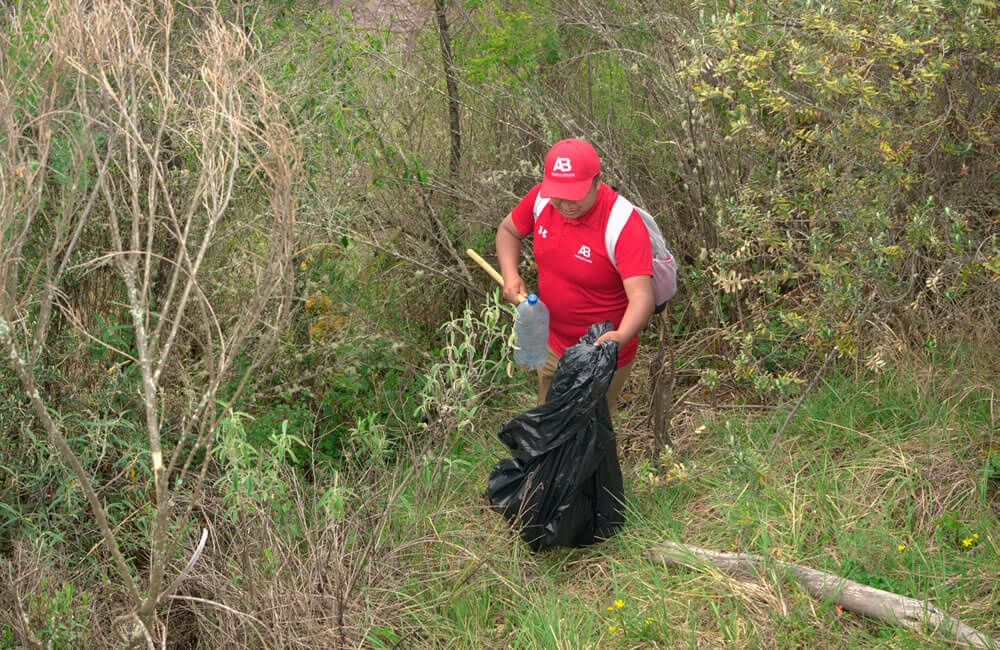
Ending the Day Together
We closed the day with a shared lunch, talking about the experience and discussing how future clean-up activities could be improved. With tired legs and a sense of fulfillment, we returned knowing that, in a small but meaningful way, we had given something back to this Andean landscape.

My name is Abel, and I am the co-founder of AB Expeditions, a local travel company based in Cusco. I was born in Chinchero, in the community of Chusso. My journey began working as a farmer, then later as a porter on the Inca Trail. After that, I studied to become a tour guide, learned English, and spent 20 years guiding different treks around the Cusco region.
Over the years, I began writing blogs about the treks I’ve done and sharing useful tips about traveling in Cusco. Eventually, I founded AB Expeditions to offer authentic travel experiences with a strong commitment to supporting local communities and creating unforgettable adventures for our guests.
- Abel

- Abel
- Abel
- Abel
