
Llama And Alpaca: Are They The Same?
Often one of the first things that come to mind when we think of “South America” or “Peru”, Llamas and Alpacas are well-known all around the globe for their fluffy textures and cute appearances. However there are definitely some distinct differences between both to keep an eye out for.
Llamas are the larger of the two, and have much more resemblance to Camels that are found in Northern Africa. As well as having bigger size, they have a longer and narrow facial structure. Unlike their African counterparts, Llamas do have layers of wool, however it’s much more coarse and thin when compared to Alpacas – which makes it easier to differentiate between them. Llamas are also infamous for spitting when feeling aggressive, while Alpacas are generally more passive.
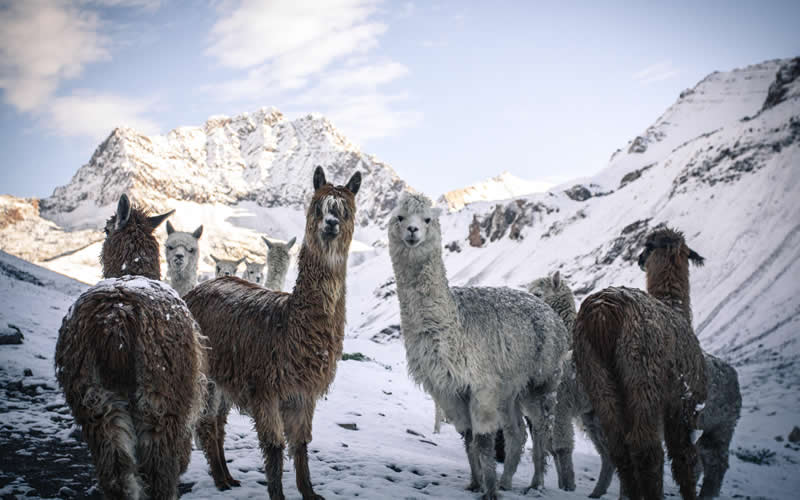
Alpacas are the most sought-after of the two here in Peru and around South America, which have very fluffy wool and are smaller in size. Varying between shades of white, light brown and even black – they are regularly sheared for their wool to create warm clothes and garments – and especially the babies which produce large amounts during their first shear. Alpacas also have rounder faces than Llamas, but also have a less aggressive nature and tend to use their body language rather than spitting when threatened.
Where To Find Llamas And Alpacas
Found throughout South America’s high altitude lands, Llamas and Alpacas thrive in cooler climates (and are also found lower down throughout Patagonia further south).
This means they are found in abundance in Peru (around Cusco, Arequipa, Lake Titicaca) as well as Bolivia (around La Paz and Uyuni). Given their specific locations within the Andes, both animals serve important uses – such as their warm wool for garments and also for their meat in more remote areas. Ancient civilisations such as the Inca also revered Alpacas and Llamas – with their high quality wool an important status symbol.
If you’re travelling to Peru in particular and want the best chance of getting up and close with Llamas and Alpacas for that perfect selfie – then Cusco is definitely the best place to do so. Routes like those of the Ausangate Trek are filled with giant herds, while they can often be seen grazing on top of Machu Picchu too.
Frequently Asked Questions About Llama And Alpaca
Below we’ll now answer some of the frequent questions we get about the Llama and Alpaca, as well as anything else important that you need to know.
Is It Llama Or Alpaca In Peru?
Both of these species are found in abundance in Peru, which thrive within Andean destinations such as Cusco, the Sacred Valley and around Lake Titicaca. The biggest difference between the two is their size – where Llamas are bigger – and also have more narrow faces and less wool than Alpacas. In Peru we can also find the Vicuña and Guanaco species too, which have their own unique features.
Can A Llama And Alpaca Breed?
Both species come from the same Camelidae animal family, and therefore can breed together. The resulting offspring is a new species which is called either a Huarizo or Misti – which is larger than Alpacas though smaller than Llamas, and tend to have longer wool than Llamas. Huarizos come from a male Llama and female Alpaca, while Mistis come from a male Alpaca and female Llama.
Which One Spits Alpaca Or Llama?
Both Llamas and Alpacas are capable of spitting, although Llamas are definitely more temperamental and prone to this habit. Usually they spit at other Llamas when in competition or mating, however they can spit at humans if they feel threatened or are over-worked. Alpacas on the other hand are much less prone to spitting, and instead use their body language to signal when they are unhappy.

Overview Of The Llama And Alpaca
And that’s all for this guide on the infamous Llama and Alpaca species found in South America, and how to tell the difference between the two.
Known for their similar appearance to camels yet with bright wool and smaller statures, Llamas and Alpacas are found in abundance around the Andean regions of South America. We’ve learnt that Alpacas are smaller, have more wool and rounded faces, while Llamas are bigger with more coarse wool and pointier faces.
Are you heading to Peru and want to see both Llamas and Alpacas in abundance? Then the Cusco region is the perfect place to head to, especially where both wild species wander sites such as the Inca Trail, Rainbow Mountains and archaeological sites as they please. Check out our Sacred Valley Day Tour, where we will take you to prime Alpaca and Llama viewing spots while also seeing the region’s very best highlights.

Peru Travel Expert